
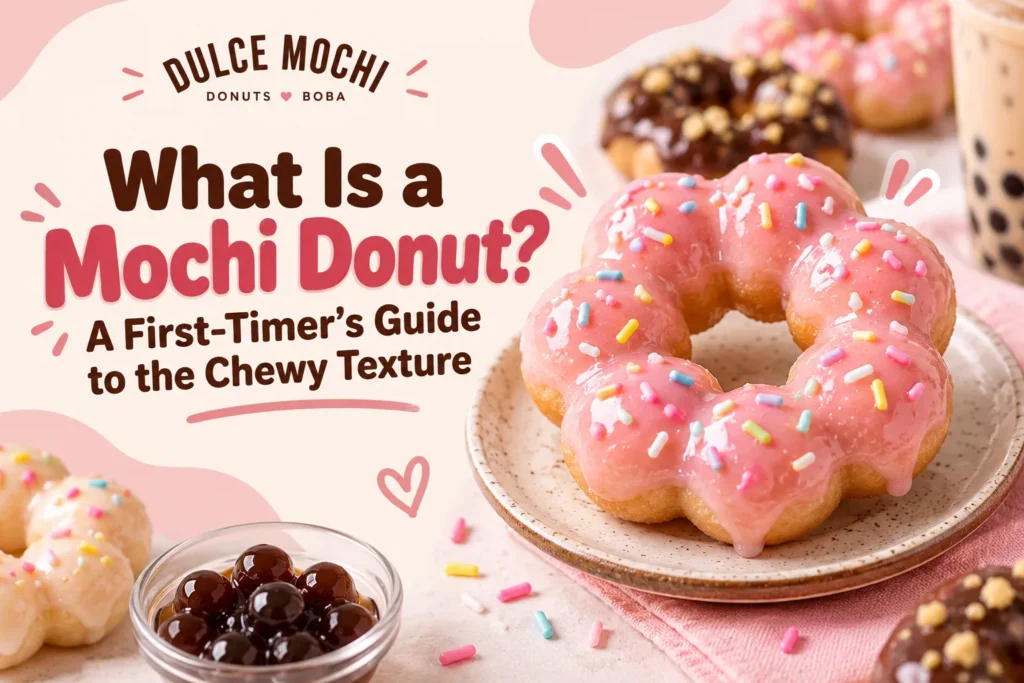
A mochi donut is a donut known for its springy, chewy texture. Compared with the fluffy bite of a typical yeast-raised donut or the tender crumb of a cake donut, it usually offers more stretch and gentle resistance as you chew. Recipes vary, so the name describes a style of donut rather than one universal ingredient list.
If you have never tried one, the texture is the best place to start. This guide explains what to expect, how mochi donuts compare with familiar donuts, and how to choose a first order.
What People Mean by a Mochi Donut
The word “mochi” gives you a clue about the eating experience: a soft, elastic chew associated with Japanese mochi. A mochi donut brings that kind of chewiness into a donut format. It does not necessarily mean there is a piece of mochi or a mochi filling inside.
You may also see the term “Japanese-style mochi donut.” That description alone does not tell you the exact recipe, preparation method, or ingredients. Those details depend on the shop and the product.
Many mochi donuts have a recognizable ring made of connected, rounded sections. Others may look different. Although the shape can make them easy to recognize, the defining feature for a first-time customer is the bite.
If ingredients matter because of an allergy or dietary requirement, ask the store about the specific donut and its preparation. The word “mochi” is not a guarantee that a donut is gluten-free, dairy-free, or vegan.
The Texture Customers Notice
The mochi donut texture is usually described as chewy, springy, or slightly stretchy. Instead of immediately breaking into crumbs, the interior gives a little resistance before yielding as you chew.
That does not mean it should feel hard. Softness and chewiness can exist together: the donut may feel tender when you bite into it while still having more elasticity than a conventional donut.
- At the first bite: Notice how easily the outside gives way. Depending on preparation and freshness, the surface may have a delicate crispness or feel softer beneath its coating.
- Through the center: Look for the gentle spring and resistance that distinguish the interior from a fluffy or crumbly donut.
- With the topping: A glaze or other coating adds its own sweetness and texture, which can change the overall impression.
Temperature, time since preparation, and the particular recipe can all affect the experience. For your first taste, ask the staff when the donut is best enjoyed and follow any storage guidance they provide.
How It Differs from a Classic Donut
When comparing mochi donuts vs donuts, it helps to distinguish between yeast-raised and cake donuts. These familiar styles already have different textures, so there is no single “regular donut” experience.
- Yeast-raised donuts: Generally have a light, airy interior that compresses easily when you bite into it. The texture is often fluffy and bread-like.
- Cake donuts: Usually have a closer, more tender crumb that breaks apart rather than stretches.
- Mochi donuts: Typically emphasize a springier, more elastic chew. The interior offers a different kind of resistance from either a fluffy yeast donut or a crumbly cake donut.
Sweetness is a separate question. A mochi donut is not automatically less sweet than another donut. The dough, glaze, coating, and portion size all influence how sweet it tastes.
The most useful comparison is therefore personal: do you enjoy a soft, chewy bite, or do you prefer something airy or cake-like? Mochi donuts offer another texture to explore rather than a replacement for every other style.
Choosing Your First Order
Start with a flavor you already enjoy. A familiar flavor gives you one less new element to evaluate, making it easier to decide how you feel about the chewy interior.
Check the current selection instead of assuming that a flavor you saw in an older photo is available. If you are unsure where to start, ask the staff which current option lets the donut’s texture come through most clearly.
- For a first taste: Choose something that matches your usual flavor preferences.
- For a texture comparison: Pay attention to the center of the donut as well as its topping.
- For sharing: Ask what is currently available and check everyone’s ingredient requirements before choosing an assortment.
Single vs Box
If individual donuts are available, a single is a straightforward way to find out whether you enjoy the texture. It keeps the decision simple when you are curious about trying something new.
If boxes are available, an assortment can make sense when several people are sharing or when you want to compare flavors. Check the current box size, selection rules, and pricing before ordering. A box does not necessarily include every flavor or allow the same choices as an individual order.
Choose the quantity around how many people will be eating and when you expect to enjoy the donuts. If you plan to save some for later, ask for product-specific storage advice.
Ready to see what to try locally? explore mochi donuts at Dulce Mochi in Sherman Oaks, then confirm the current selection before placing your order.
Frequently Asked Questions
What is a mochi donut?
A mochi donut is a style of donut known for a springy, chewy interior. Its texture is generally more elastic than the fluffy crumb of a yeast-raised donut or the tender crumb of a cake donut. Recipes vary by shop.
Does a mochi donut have mochi inside?
Not necessarily. The name commonly refers to the donut’s chewy texture rather than a separate mochi filling. Ask the shop about the specific product if you want to know whether it is filled.
Are mochi donuts gluten-free?
Not necessarily. Recipes and preparation practices vary, and the name alone does not establish gluten-free status. If you need to avoid gluten, confirm ingredients and cross-contact practices with the store before ordering.
Are mochi donuts less sweet than regular donuts?
Not automatically. Sweetness depends on the dough, glaze, coating, and portion size. Chewiness describes texture, not sugar content.
Should I start with one donut or a box?
If available, one donut is a simple way to try the texture. A box may suit sharing or comparing flavors. Confirm current quantities, flavor choices, and pricing before ordering.